Designing a compact bathroom often feels like a balancing act between style and spatial limitations. When square footage is tight, every surface choice carries substantial visual weight. The tiles you select for your floors and walls set the tone for the entire room, dictating how open, bright, and functional the area feels.
A well-executed tile layout tricks the eye, making cramped powder rooms or narrow guest baths look surprisingly generous. Making the right choice requires evaluating tile dimensions, light reflectance, maintenance needs, and slip resistance. With the right design strategy, you can turn a constrained layout into a cohesive, comfortable retreat.
Prioritize Scale: Tile Size Matters More Than You Think
A common misconception in interior remodeling is that small bathrooms demand miniature tiles. In reality, covering every wall with tiny tiles creates hundreds of intersecting grout lines. This visual grid breaks up the surface plane and makes walls feel busy, crowded, and closed in.
-
Large-format tiles: Dimensions like 12×24 inches or 24×24 inches work exceptionally well in tight quarters. Fewer joints mean continuous visual uninterrupted flow, which expands the room visually.
-
Medium proportions: Standard subway tiles, typically 3×6 or 4×8 inches, remain a dependable middle ground. They offer enough surface area to avoid visual chaos while adapting easily to tight plumbing clearances.
-
Mosaics as targeted accents: Penny rounds, hexagons, and mini herringbone patterns work best when confined to niche backsplashes or shower pans where high traction is essential.
When using larger tiles, ensure your contractor checks that the subfloor and wall studs are flat. Large tiles need an even plane to avoid uneven edges along grout lines.
Choose Finishes That Multiply Natural and Artificial Light
Lighting in a small bathroom is often limited to a single window or an overhead fixture. Tile finishes directly influence how that available light moves through the space.
-
Glossy wall finishes: Polished ceramic and glazed tiles act like subtle mirrors. They bounce ambient light across adjacent walls, softening harsh corners and creating a sense of airiness.
-
Matte floor surfaces: High-gloss finishes on floors pose a serious slip risk when wet. Matte porcelain or honed natural stone provides the traction needed for foot traffic while adding an understated, earthy counterpoint to shiny walls.
-
Satin and honed textures: If high gloss feels too formal or reveals water spots too quickly, a satin finish provides a soft sheen that diffuses light gently without showing fingerprints.
Mixing a glossy wall tile with a tactile, matte floor tile prevents a compact bathroom from looking flat or sterile.
Pick a Cohesive, Light-Reflecting Color Palette
Color alters spatial perception dramatically. Dark, saturated tones absorb illumination, drawing walls closer together, while pale hues push boundaries outward.
-
Warm whites and creams: Bright stark white can feel clinical under fluorescent or low-kelvin bulbs. Softer off-whites, warm alabaster, and soft linen tones keep the space crisp without feeling cold.
-
Muted neutrals: Pale taupe, soft greige, and misty gray add depth while preserving a wide, uncluttered feel.
-
Soft pastels: Seafoam, powder blue, and pale sage reflect light while introducing a calming, spa-like identity that white alone cannot achieve.
-
Restrained contrast: If you love dramatic colors like forest green or charcoal, reserve them for the vanity cabinet or a single accent niche rather than sprawling floor-to-wall installations.
Keeping the wall and floor tiles in the same tonal family reduces abrupt visual transitions, making the boundary between surfaces less obvious.
Plan Directional Layouts to Correct Room Proportions
How you align your tiles can alter the perceived height or width of your bathroom. Layout patterns can guide the human eye in specific directions.
-
Vertical stacking: Laying rectangular tiles vertically draws gaze upward toward the ceiling. This approach is ideal for rooms with low ceilings, giving the impression of elevated clearance.
-
Horizontal running bond: Aligning rectangular tiles horizontally widens narrow corridors and compact powder rooms by elongating the sightline along the wall.
-
Diagonal floor arrangements: Setting square tiles on a 45-degree angle disrupts standard perspective lines, making it harder for the eye to measure the room dimensions quickly.
-
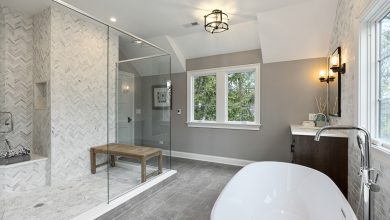
Herringbone configurations: A herringbone layout adds dynamic movement. When pointed upward, it lifts the eye toward the crown molding; when pointed outward, it broadens the walkway.
Select a single directional strategy for your primary wall to avoid competing lines that overwhelm the senses.
Evaluate Material Durability and Water Absorption
Bathrooms endure heavy humidity, temperature swings, and concentrated puddles. The chosen material must withstand repeated exposure to moisture without warping or staining.
-
Porcelain tile: Dense, non-porous, and resistant to chipping, porcelain is the top option for high-moisture zones. It absorbs less than half a percent of water, making it suitable for both stall floors and tub enclosures.
-
Glazed ceramic: A cost-effective alternative to porcelain, ceramic is lightweight and easy to cut around tight plumbing fixtures. It performs best on vertical walls and low-traffic powder room floors.
-
Natural stone: Marble, slate, and travertine deliver timeless organic character, but their porous structure requires regular sealing to prevent moisture penetration and shampoo stains.
-
Glass tiles: Impermeable to moisture and mildew, glass makes an excellent choice for shower walls and backsplashes, though it requires specialized cutting tools during installation.
Prioritize through-body porcelain on floors so that everyday wear or dropped items will not expose an underlying base layer of a different color.
Match Grout Color and Line Width Thoughtfully
Grout is frequently treated as an afterthought, but in a small room, it can define the success of the entire project. High-contrast grout turns every tile into an outlined box, multiplying visual distraction.
-
Color-matched grout: Choosing a grout that closely matches your tile creates a clean, monolithic surface. This minimizes hard edges and expands visual real estate.
-
Rectified tile edges: Tiles with mechanically ground, sharp 90-degree edges allow for narrow grout lines, down to one-sixteenth of an inch. Narrower joints produce a smoother, seamless finish.
-
Stain-resistant formulations: High-performance epoxy or urethane grouts resist water, soap scum, and mold growth. They prevent the discoloration that often ruins pale grout lines in moist settings.
Reserve contrasting grout solely for deliberate decorative focal points, such as a feature wall behind a freestanding mirror.
Extend Tiles Seamlessly into Wet Zones
Dividing a small bathroom with curbs, raised thresholds, and half-walls breaks the floor plane into separate fragments. Running the same surface across functional zones unifies the footprint.
-
Curbless walk-in showers: Carrying floor tiles straight into the shower without a raised step allows the entire footprint to read as one continuous room.
-
Floor-to-ceiling wall coverage: Running wall tiles from the baseboard all the way to the ceiling eliminates the awkward drywall gap above shower stalls, adding apparent height.
-
Floating vanity transitions: Wall-mounting your vanity lets flooring extend completely to the base wall, exposing more ground area and making the room feel broader.
When using the same tile across dry and wet floors, ensure it carries an adequate dynamic coefficient of friction to guarantee safe footing when soaked.
Frequently Asked Questions
What coefficient of friction rating should bathroom floor tiles have?
For residential bathroom floors, select tiles with a dynamic coefficient of friction rating of 0.42 or higher when wet. This standard ensures adequate slip resistance to prevent falls on damp surfaces without requiring an excessively coarse texture that traps grime.
How do I clean grout lines in a small bathroom without scratching polished tile surfaces?
Use a pH-neutral cleaner mixed with warm water and a soft-bristled nylon brush. Avoid acidic solutions like vinegar or harsh scouring powders on polished marble and glazed ceramic, as acids can etch delicate surfaces and break down cementitious grout binders over time.
Can I install new tiles directly over existing tile to save space and demolition time?
While tiling over existing tile is structurally feasible if the old layer is sound and clean, it raises the finished floor height. In a small bathroom, this creates clumsy transitions at entry doorways, disrupts toilet flange alignment, and reduces clearance beneath vanity cabinets. Stripping down to the subfloor is generally the superior approach.
Are patterned encaustic cement tiles suitable for a compact bathroom floor?
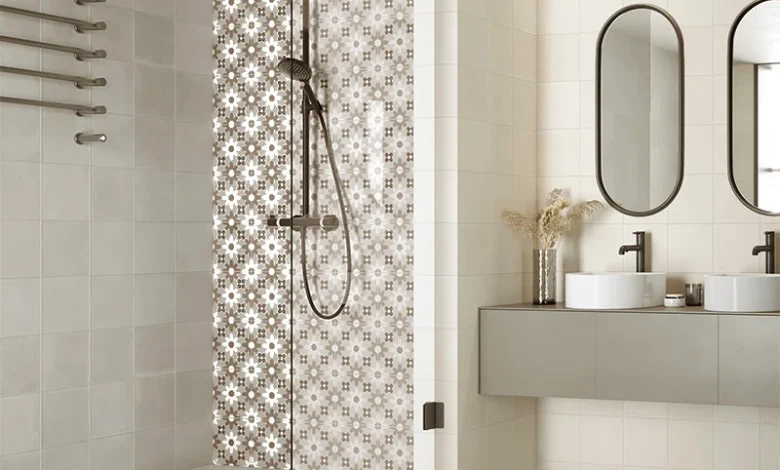
Patterned encaustic cement tiles can work well as an intentional accent, provided the surrounding wall surfaces remain plain and neutral. However, real cement tiles are porous, prone to water staining from personal care items, and require routine sealing. Printed porcelain replicas often provide the same visual impact with lower maintenance.
Does carrying wall tile all the way to the ceiling make a small bathroom feel like a box?
Floor-to-ceiling tiling actually accomplishes the opposite when executed in light or neutral shades. Removing the horizontal paint break between tile and drywall eliminates a visual boundary, tricking the brain into seeing the walls as a single, tall vertical plane that lifts the perceived ceiling height.
How much extra tile should I purchase to account for cuts in a small bathroom?
Order an overage of roughly 15 percent instead of the standard 10 percent used in larger areas. Small spaces require more perimeter cuts, notches around pipe penetrations, and fitting along corners, which generates higher scrap waste per square foot installed.
Can three-dimensional or textured wall tiles work in a narrow powder room?
Subtle dimensional tiles, like fluted or scalloped ceramic, work well on an accent wall behind a vanity when illuminated by soft downlighting. However, avoid deep, aggressive reliefs inside wet shower enclosures, as complex ridges collect mineral scale and soap deposits that are difficult to scrub clean in tight confines.