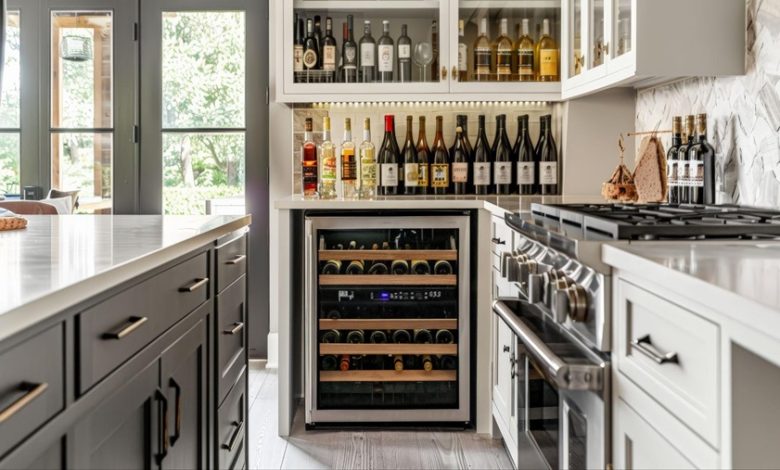
Refrigerated storage can make a kitchen, bar or hospitality space more practical, but the right appliance depends on what needs to be stored. An undercounter chiller may suit general beverage storage, while a wine cooler refrigerator is designed around the requirements of wine bottles. Although the appliances can look similar, their temperature controls, internal layouts and intended uses may differ.
Before purchasing, homeowners and hospitality operators should consider how the appliance will be used and where it will be installed. The following five factors can help distinguish the requirements of an undercounter chiller from those of a dedicated wine cooler.
1. Storage Purpose: Decide What the Appliance Will Hold
The first decision concerns the type of items being stored. An undercounter chiller may be used for canned drinks, bottled water, soft drinks and other beverages requiring chilled storage. Its internal layout may include adjustable shelves to accommodate containers of different sizes.
A wine cooler refrigerator is designed to store wine bottles under controlled conditions. Its shelves and racks usually account for bottle shape and positioning, while its temperature settings may be tailored to wine storage.
Using a general beverage appliance for wine may not provide the level of temperature control or storage arrangement required. Likewise, a dedicated wine cooler may not offer the flexibility needed for mixed beverage storage.
Buyers should list the items they plan to store and estimate the proportions of bottles, cans and other containers before selecting an appliance.
2. Temperature Settings: Match the Cooling Requirements
Temperature control is a key difference between the appliance categories. General beverage storage may require a chilled range suited to the drinks being served. Wine storage has different considerations, as the preferred temperature depends on the type of wine and the purpose of storage.
A wine cooler may offer adjustable settings or separate temperature zones, depending on the model. This can be useful for storing different wine styles under suitable conditions. However, buyers should check the actual temperature range and stability rather than relying on a broad product description.
An undercounter chiller may provide a more straightforward cooling range for everyday drinks. Operators should check if its settings suit the intended contents and if the appliance maintains a consistent internal temperature.
3. Capacity: Calculate Storage Needs in Practical Terms
Advertised capacity does not always reflect how much an appliance can hold in everyday use. Bottle shapes, shelf spacing and internal dividers can affect the usable space.
For an undercounter chiller, buyers should consider the number of cans and bottles required during busy periods. Adjustable shelving may provide more flexibility when storing containers of different heights.
For a wine cooler refrigerator, capacity is usually expressed in bottle count. However, the stated figure may assume a standard bottle size and a particular arrangement. Larger bottles or unusual shapes can reduce the available space.
Buyers should consider future needs as well as current storage requirements. A hospitality venue may need more capacity during events, while a household may prefer an appliance that fits its usual purchasing habits without taking up unnecessary room.
4. Installation Dimensions: Check the Available Space
Undercounter appliances need careful measurement before purchase. Buyers should check the width, height and depth of the available opening, including any clearance required for ventilation, doors and electrical connections.
A built-in model may have different installation requirements from a freestanding appliance. Some units require ventilation at the front, while others need specific space around the sides or rear. The manufacturer’s installation instructions should guide the final measurements.
Door swing is another practical detail. A unit may fit beneath a worktop but become awkward to use if its door opens into a walkway or obstructs nearby cabinets.
Buyers should also consider the floor surface, power supply and accessibility of the installation area. For commercial settings, the appliance must fit into the working layout without interfering with staff movement.
5. Accessibility: Consider How Drinks Will Be Retrieved
An appliance should support the way people use the space. A beverage chiller in a kitchen or bar may need to provide quick access during meal preparation or service. Shelf layout, door opening and internal lighting can affect convenience.
Wine storage has different access considerations. Bottle racks should allow users to identify and retrieve the required bottle without disturbing the arrangement unnecessarily. Shelves that slide out or provide clear visibility may improve day-to-day handling, depending on the design.
Noise level may also matter. An appliance installed in an open-plan kitchen, dining area or guest-facing space should operate at a level suitable for its surroundings. Buyers should review the manufacturer’s specifications and consider the appliance’s location before making a decision.
Product Suitability Matrix
| Buying factor | Undercounter chiller | Wine cooler refrigerator |
| Storage purpose | General chilled beverages | Wine bottles |
| Temperature needs | Chilled storage for selected drinks | Wine-specific storage settings |
| Capacity | Cans, bottles and mixed containers | Bottle capacity and rack layout |
| Installation | Worktop clearance and ventilation | Cabinet fit, ventilation and bottle access |
| Accessibility | Quick retrieval of drinks | Convenient bottle organisation |
An undercounter chiller is generally suited to flexible beverage storage, while a dedicated wine cooler is designed around bottle organisation and wine storage conditions. The right choice depends on the contents, required temperature range, available capacity and installation layout. Buyers should review product specifications and installation requirements before placing an order.
Contact Kadeka to discuss refrigeration options and identify an appliance suited to your storage needs and available space.