
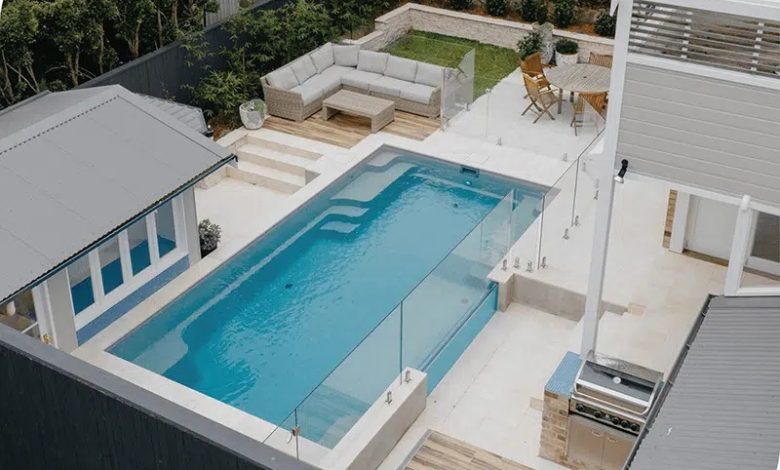
Fibreglass pools have spent the last decade steadily closing the gap on concrete as Australia’s default backyard pool choice, and 2026 looks like the year that shift becomes hard to ignore. Faster builds, tighter local manufacturing standards and lower long-term maintenance are combining to make fibreglass the pool type more homeowners are landing on — not as a compromise, but as the option that best matches how people actually want to build a pool today.
Faster From Contract to Swimming
The biggest practical draw of a fibreglass pool is speed. Because the shell is manufactured off-site as a single unit, the on-site work is largely limited to excavation, craning the shell into place, backfilling and finishing touches like paving and fencing. That typically means a build measured in weeks rather than months, compared with the longer, multi-stage sequence a concrete pool requires. For homeowners who want to be swimming this summer rather than waiting out a lengthy construction program, that timeline advantage alone is often the deciding factor.
Local Manufacturing Has Changed the Quality Conversation
The bigger shift in recent years has been on the supply side. More fibreglass shells are now being manufactured domestically rather than imported, and local manufacturers have been investing in better materials, more consistent lamination processes and tighter production controls. That matters because a fibreglass pool is only as good as the manufacturing process behind it — inconsistent resin application or poor quality control can lead to issues like blistering or structural weak points down the track. As local manufacturing has matured, the average quality of the product available to Australian buyers has genuinely improved, and that improvement is a big part of why fibreglass is winning over buyers who might once have defaulted to concrete.
Manufacturing Standards Are Raising the Bar
Across the pool industry, expectations around quality and compliance have been tightening, and fibreglass manufacturers have been among the biggest beneficiaries of that shift. Reputable manufacturers are now applying more rigorous testing and quality assurance to their shells, backed by longer and more confident structural warranties than were common in the past. That’s made the gap between a well-made shell and a poorly made one far more visible to buyers who take the time to compare warranties, manufacturing origin and quality documentation before committing.
The practical takeaway is that not all fibreglass pools are equal, and the manufacturing standards behind a particular shell are now a legitimate point of comparison — arguably as important as the shape or colour of the pool itself.
Predictable Pricing in an Unpredictable Market
With materials and trade labour costs continuing to climb across construction generally, predictability has become a genuine selling point in its own right. Because so much of a fibreglass pool’s cost is fixed at the point of manufacture, pricing tends to be far more stable up front than a concrete build, which is more exposed to on-site labour costs, weather delays and scheduling blowouts across its longer sequence of trades. For homeowners trying to budget carefully in the current climate, that certainty is worth as much as the headline price itself.
Lower Maintenance Over the Life of the Pool
The advantages of fibreglass don’t stop once the pool is finished. A fibreglass shell’s smooth, non-porous gelcoat surface generally resists algae growth better than the more porous surface of a concrete pool, which can mean less chemical use and less scrubbing over time. Concrete pools, particularly those with tiled or pebble interiors, often need periodic resurfacing or re-tiling over the years — an additional cost that fibreglass owners typically don’t face in the same way. Over the full life of the pool, that lower maintenance burden adds up to a meaningfully lower total cost of ownership.
What to Look for When Choosing a Fibreglass Pool
Because quality varies between manufacturers, it’s worth asking a few specific questions before committing to a shell rather than assuming all fibreglass pools are built to the same standard:
- Where was the shell manufactured, and is it a local or imported product?
- What structural warranty backs the shell, and how long has the manufacturer offered it?
- What quality assurance and testing does the manufacturer apply during production?
- How does the quoted build timeline compare with similar recent installations?
Making the Right Choice for Your Property
For the large majority of Australian backyards, the case for fibreglass has genuinely strengthened in 2026: faster builds, more predictable pricing, improving local manufacturing standards and lower ongoing maintenance make it the more practical choice for most homeowners, without asking them to compromise on the finished result. Builders who specialise in fibreglass pools gold coast, such as Built Right Pools, are well placed to talk buyers through shell manufacturing, warranty terms and realistic build timelines — the details that separate a good fibreglass pool from a great one. For homeowners weighing up their options this year, it’s worth looking past the marketing and asking those specific questions before deciding whose fibreglass shell ends up in the backyard.


