
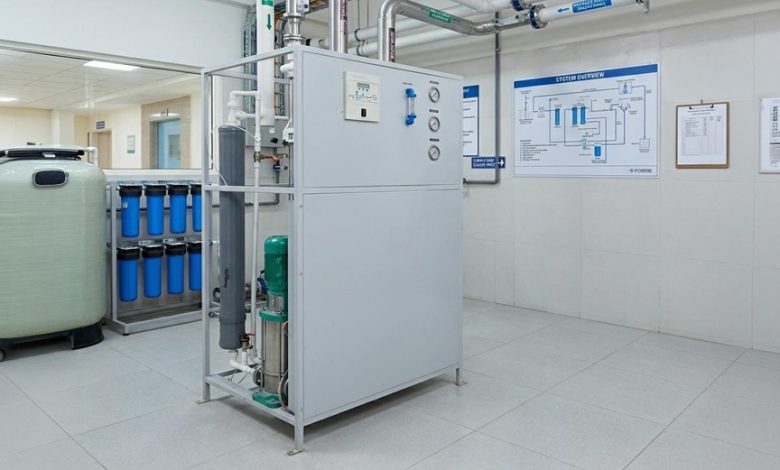
Water plant machine prices can vary significantly from system to system. The cost of a water plant machine for a small office can be different from the one intended for a factory or hospital. Various factors like capacity, water quality, purification technology, and automation contribute to the overall price.
If you know what influences the prices of these water plant machines, you can buy a system that can meet your requirements.
Why Water Plant Machine Prices Vary
A water plant machine does not have a fixed price. Their price is dictated by factors such as daily water demand, source water quality, and treatment requirements.
For example, a machine purifying water with a lower level of contamination may need fewer treatment stages than one processing water with high TDS and hardness.
Factors That Influence Water Plant Prices
The following are some of the factors that can affect the overall costs of water plants:
1. Capacity and Output Requirements
Small-capacity systems typically handle lower volumes of water and are often installed in small offices, schools, and small commercial establishments.
Larger systems, on the other hand, are designed for hospitals, factories, hotels, industrial campuses, and institutions with high water demand. These machines require bigger pumps, membranes, and pressure vessels.
As capacity increases, equipment requirements, installation complexity, and overall investment may also increase.
2. Quality of Existing Water Supply
The quality of the incoming water is a major influence on the system design. High TDS levels, excessive hardness, iron content, or suspended particles may require additional treatment processes.
3. Type of Purification Technology Used
● Reverse Osmosis (RO) Systems
This technology is mainly used to reduce TDS levels and get rid of dissolved impurities. The price of the system can be affected by the size and quality of the membrane and the number of purification stages.
RO plants are generally used where water quality contains high levels of dissolved salts (TDS).
● UV and UF Technologies
UV and UF technologies are ideal for low-TDS water treatment, where microbial contamination can be a significant problem. They are usually less complex and have fewer parts than larger RO systems.
● Multi-Stage Treatment Systems
Some RO plants come with multi-stage purification to achieve the desired water quality. They usually contain a Sedi-Filter, Chemi Block, Reverse Osmosis Cartridge, UV e-boiling, and an Active Copper Booster Cartridge. These multi-stage purification RO plants can deliver high-quality clean water. But they can also increase the overall cost of the water plant machine.
4. Quality of Components and Materials
The performance of an RO plant mainly depends on the quality of the membranes and pumps. In general, high-quality components provide better efficiency, longer durability, and lifespan of the system.
Although high-quality components can be more expensive in the short run, they can help to reduce maintenance and replacement costs in the long-run.
5. Automation and Smart Features
● Manual Systems
Manual systems are designed for operators to manually monitor performance and carry out various functions. They are generally appropriate for applications where water demand is predictable and continuous monitoring is not necessary. They generally have a simple design with fewer automated components, making it a relatively low-cost choice.
-
Automatic Monitoring and Controls
Many modern RO plants are equipped with digital displays, automatic flushing, sensors, and microprocessor-based controls. These features, however, can increase the initial investment cost but may improve operational efficiency and reduce manual intervention.
6. Installation and Infrastructure Cost
The purchase price is only one aspect of the total investment. Plumbing connections, electrical work, and piping arrangements can contribute to the overall installation cost. If the plant is connected to a water cooler to provide chilled water on demand, the total expense may also increase.
7. Availability of Adequate Space
The overall expense can also be affected by the availability of adequate space for installation. A small water plant machine may require less space than a large RO plant.
8. Periodic Maintenance
RO plants require periodic maintenance to maintain their performance. Membranes and filters have to be replaced at regular intervals based on water quality and usage. This can increase the operational cost.
9. Availability of Spare Parts
Even well-maintained systems may need replacement parts from time to time. Readily available genuine spare parts can help minimise downtime and ensure uninterrupted operation.
Conclusion
The cost of an RO plant depends on more than just capacity. Water quality, purification technology, quality of components, automation, and installation requirements all influence the final cost.
Understanding the factors that influence the cost of RO plant options can help businesses make
more informed decisions and invest in the right solution for their needs.


