
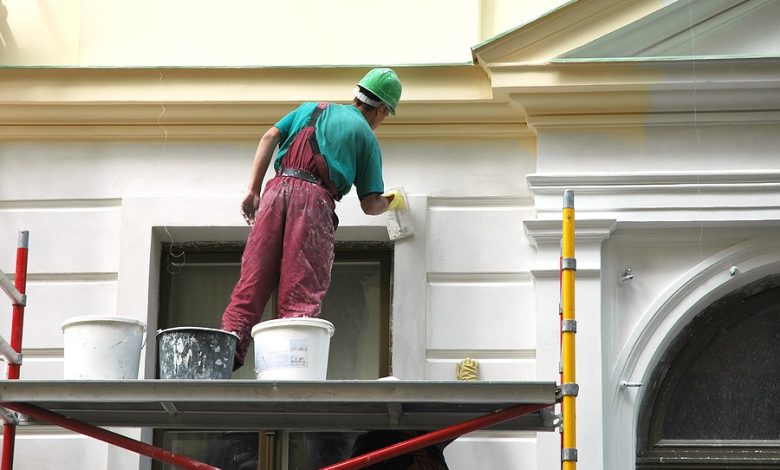
Large strata painting projects often don’t go to plan. Nothing’s wrong with the paint though. They fail for the same handful of reasons, over and over, and none of these reasons are about the paint. The scope wasn’t documented properly in the first place. The quotes therefore weren’t apples-for-apples so the committee didn’t have a complete picture with which to take owners along for the spend. Owners weren’t properly prepared for the disruption. Or the contract had no teeth once the scaffold came down. They’re all preventable issues. At the end of the day, painting a large strata project well is a governance exercise first and a paint job second.
Document everything before a single brush touches the wall
Before you send the tender out, you really should have a formal pre-paint condition audit conducted on the entire building. This basically involves walking every elevation, every corridor, every balcony and car park wall, and noting every existing crack, mould patch, water stain, render damage and previous coating failure – with photos and dates attached.
The dilapidation report matters for one reason: it protects both sides. Without it, any crack that appears during or after the job becomes an argument about whether the painter caused it or whether it was already there. Owners corporations that skip this step almost always end up in a dispute with either the contractor or a unit owner who claims new damage. A five-minute photo walk-through costs almost nothing compared to the legal and remedial costs of an unresolved blame game months later.
The audit also gives your contractor a clearer picture of what they’re actually quoting on, which tends to produce more accurate pricing and fewer “unforeseen condition” variations once work starts.
Budget for what you can’t see, not just what you can
Owners corporations often underestimate the cost of a repaint because they’re only thinking about the paint and labour to apply it. Nevertheless, the reality is that surface preparation and access equipment, including pressure washing, scraping back failed coatings, patching render, masking, and erecting scaffolding or elevated work platforms, represent 60-70% of the total project’s cost. The paint itself is usually the least expensive part of the process.
This is not a detail to be overlooked. It’s the main reason why committees are surprised at the cost of the project when the quotes are higher than expected. The cheapest quote is often also the one that compromises on prep work. Poor surface preparation has been estimated to cause up to 85% of premature paint failures, and Australian paint manufacturers, as well as industry bodies, often refer to this statistic when talking about the longevity of paint coatings. If a quote seems too good to be true, ask exactly what prep work is included and how it compares to the others. A painter who has considered all aspects of the job should have the necessary details of the preparation part and not just a generic mention saying “surface preparation as required.”
Access and exposure to wind aspects add to these costs. Taller buildings and those located on windy streets will often require EWPs instead of swing stages. Plus, it’s not rare that due to the wind even the EWPs can’t be used. Be prepared for that and be flexible if you’re required to halt the work due to unfavorable weather conditions. This should reflect your potential additional costs and not just the costs that can’t be avoided.
Get quotes that can actually be compared
You must have at least three itemised quotes for a project of this scale, and ideally, the quotes are structured by the contractors so you are comparing the same thing three times over. Not three different jobs with three different price tags. The key components to break down on each quote are, the paint brand and product line, the number of coats, the film thickness, the scope of surface prep, and the warranty period.
A single line that says “premium quality paint will be applied” can be ignored. It is the number one most common thing that owners later discover was cost-cut to ‘match the lowest quote’ because ‘premium quality’ is not a legally binding standard once you have signed on the dotted line for the work. Not only is it difficult to spec against in court, but your experience will probably be that the least forthcoming with written references on whether the contractor is doing the right or wrong thing is the one who applied a single vague line in the quote and no more. Demand a written spec giving the actual product name – i.e., a specified acrylic exterior system, an elastomeric coating for render with hairline cracking, an anti-graffiti clear coat for vandals on ground-level walls. If the contractor bridles at the idea of giving an actual product name – they’re playing chicken, not offering flexibility.
Beyond the paint spec, you are also now shortlisting based on experience, not just comparative price. Surface coating multi-residential is a whole different game from surface coating a house. You are often dealing with dozens of owners, a strata manager, a shared lobby access, and OH&S demands for scaffolding and height work. When you are actually deciding who to give the tender to, a history of similar work should be on paper. That’s why owners corporations in WA tend to shortlist established painters perth they have previously worked well with on similar projects – local experience with the climate, council colour restrictions, and body corporate processes tends to mean fewer surprises mid-job.
Verify insurance yourself, don’t take it on faith
All trades on common property must have in place current public liability insurance and workers compensation cover – full stop. A public-liability claim can ruin you. Just the legal costs to defend are crippling; the legal costs to settle will destroy you. Just one fall from some scaffolding will eat up the limit of a one-million dollar policy – before it even gets to a trial. Then there’s the actual damages payout. And your committee probably lacks insurance-specific training: so how do you know your building insurance will cover that claim, or even if it should?
Don’t simply accept a photocopied certificate of currency found in a quote pack as proof. The committee needs to call the insurer or broker listed on the certificate, check that the policy is current, that the scope of work required is covered by the policy, and that the policy hasn’t been cancelled since that certificate was issued. This usually takes ten minutes, and it’s the cheapest risk that you can mitigate in the entire project. If your committee is not doing this, you are self-insuring some or all of the risk by default. And if you’re thinking that your building insurance will cover it, you are right. Probably. But is your building insurance the correct policy to respond? That could get messy. And remember you just need one neighbour willing to persist, one lawyer willing to act for nowhere near as much as the original bloke, to lose your building insurance.
Time the project around the weather, not the calendar
The summer months in Perth are extremely hot and dry, meaning that the paint can dry long before it’s had a chance to properly bond. This can result in poor adhesion and the paint peeling away too soon. In contrast, higher humidity that the winter months bring can postpone the curing time. This can result in additional halts in work and lead to an increase in financial costs, for example, extra scaffold hire time. Reaching an ideal solution therefore involves relying on the strata committee knowledge of Perth’s climate and teaming this with the experience of the professional painter.
In strata work’s context, late spring, towards the end of October and early autumn which in Perth is approximately from mid-March to the end of April are usually the most suitable periods for a painting project. In addition to ideal temperatures and humidity levels, these time frames also tend to offer overall lower humidity and rainfall levels. However, it is worth noting that even during the most achievable times of the year, weather conditions can alter rapidly. A good quality painter will have taken potential weather changes into consideration as part of their program priorities in any case. Make sure to contact a contractor with enough time before these windows as the best ones usually aren’t free for long. Fall would be the busiest of the two.
Tell residents what’s coming before it arrives
A large-scale repainting project can be more disruptive to residents’ day-to-day lives than a strata committee imagines. Scaffolding can block out natural light and any hope of privacy. Early starts to beat the heat and get the painting done quickly can see a power sander as your alarm clock. Balconies might be off-limits for days on end while epoxy paints and sealers are applied. Similarly, the volatile organic compounds in many paints require windows to stay shut while spray applications are in progress.
It’s all fairly predictable stuff, though. Two weeks before your contractor is due to start work, issue a written communications plan to all owners and residents outlining your project timeline, when noisy preparation and painting can be expected, any balcony or window access restrictions, and a contact point for questions and complaints. Most headaches can be avoided with just this one simple action, because informed residents will tolerate a lot more disruption than residents who feel they weren’t given any advance warning that work was starting.
Build staged inspections and a real defect liability period into the contract
To ensure that quality isn’t compromised and that all work is completed to standard, it’s essential to incorporate a staged handover process into the contract. This allows the committee or a building consultant to inspect each elevation or section before the scaffold is removed and before any progress payments are made. This gives you the opportunity to address and correct any issues while the access equipment is still available instead of having it all removed, which is costly to remobilise.
Upon completion of the entire job, there needs to be at least a 12-month defect liability period outlined in the contract. Defects and the subsequent rectification process should be documented in writing with clear guidelines regarding the amount of time the contractor has to respond and fix the issue. Coating defects such as peeling, blistering, or discolouration not due to environmental factors may not become apparent for a few weeks. It is the warranty period, coupled with a clear process, which will protect the strata’s investment – not the vague indication that the work is “guaranteed” for 10 years.
Keep colour and environmental compliance on the checklist too
If the building is older or heritage-listed, constraints around what sort of colour you can use on facades exist within many local council guidelines, and you should probably check that before you spiral into a 30-reply email chain about the crisp whites and protectionist blush tones that make your heart sing but would never be approved. A couple of things around environmental handling matter more than most owners expect: lead-based paint might be present in an older building, and while you’re not going to eat chips of it directly off the wall, stripping or sanding it does release paint flakes that are easily ingested or inhaled, and sanding equipment can easily generate leaded dust that’s tracked out into stormwater or soil garden beds. A contractor who doesn’t look terribly confident talking to you about how they contain and dispose of paint waste in a multi-unit context probably isn’t very experienced in that area.
Getting a strata repaint right is mostly a matter of sequencing and documentation – audit first, specify precisely, quote comparably, verify insurance properly, time it around the weather, communicate early, and inspect before you pay. Get those steps right and the actual painting becomes the easy part.


